
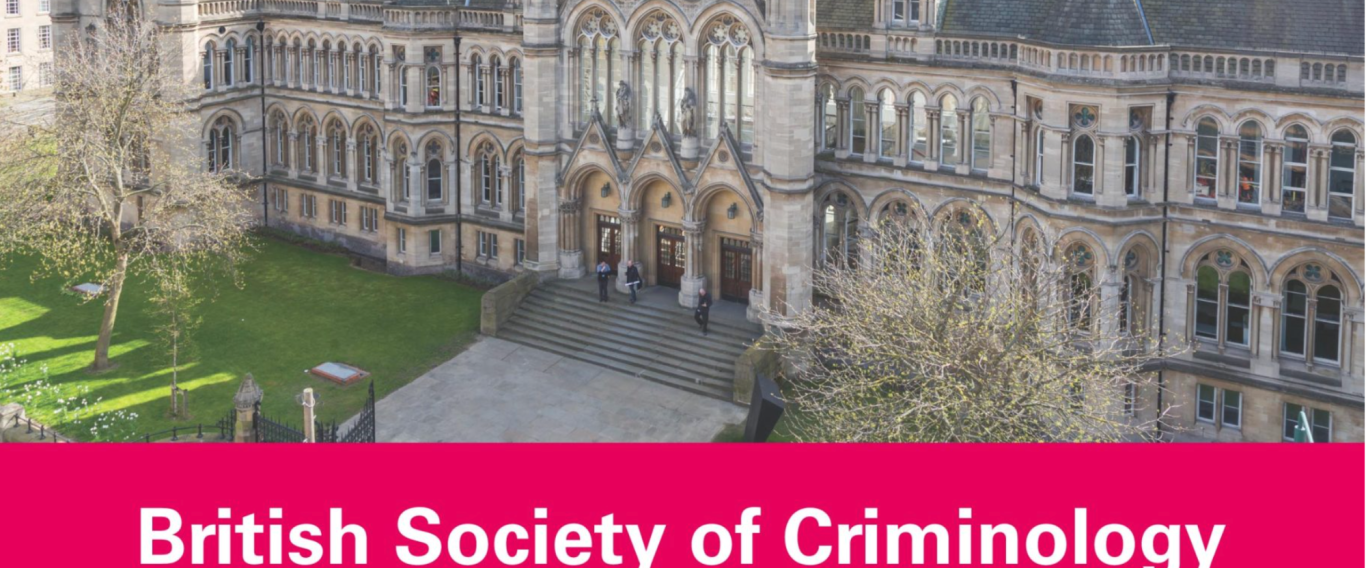
Heading to Nottingham
Presenting Transformation Research at the British Society of Criminology
In July 2026, I'll be presenting at the British Society of Criminology conference in Nottingham, England—a milestone that feels both professionally significant and deeply personal.
My presentation, "It's Changed What I'm Living For: Evidence of Transformation and Resistance in Long-Term Incarcerated Individuals," draws from years of research with 287 participants in The Urban Ministry Institute's (TUMI) Prison Ministry program. But more than data points and statistical significance, this work represents something I've come to believe is essential in criminology: the imperative to listen to voices from inside our prisons, to take seriously their narratives of transformation, and to challenge our field's sometimes narrow focus on recidivism as the sole measure of success.
Why This Matters
For too long, correctional education research has asked primarily one question: Does it reduce recidivism? It's an important question, certainly, but it's not the only question worth asking.
What happens when we expand our lens to measure human flourishing? What do we discover when we attend to purpose, meaning-making, self-control, and restored relationships? And perhaps most importantly, what do incarcerated individuals themselves say has changed in their lives?
The title of my presentation comes directly from participant voices—men and women who described not just behavioral change, but fundamental shifts in identity, purpose, and how they understand their place in the world. These aren't abstractions. They're real people navigating impossible circumstances, finding ways to grow and contribute even within systems designed more for warehousing than transformation.
The Resistance Piece
What makes this research particularly compelling, and what I'm eager to discuss with international criminology colleagues, is the concept of resistance woven throughout these transformation narratives. Participants didn't just passively receive programming; they actively resisted the dehumanizing aspects of incarceration while simultaneously engaging in deep personal change.
This tension between transformation and resistance challenges some of our field's assumptions. It suggests that genuine human development in correctional settings may actually require a degree of critical consciousness about the systems themselves.
Why Nottingham, Why Now
The British Society of Criminology has long been at the forefront of critical criminological thinking, particularly around issues of punishment, rehabilitation, and human rights in correctional contexts. Their international perspective and commitment to evidence-based policy make this the ideal venue for this conversation.
I'm honored to contribute to discussions that bridge rigorous empirical research with humanistic inquiry—to bring both the quantitative evidence of transformation and the qualitative depth of lived experience to colleagues who understand that both matter.
An Invitation
If you're attending BSC 2026 or know someone who will be, I'd love to connect. And if you're engaged in similar work—measuring what matters in correctional education, centering participant voices, or exploring alternative metrics of program success—I want to hear from you.
This presentation represents years of work, but it's really just the beginning of a larger conversation our field needs to have about what we're measuring, whose voices we're privileging, and what we really mean when we talk about rehabilitation and human potential.
I'll share more as July approaches. For now, I'm preparing, refining, and looking forward to Nottingham.
Dr. Robin LaBarbera is Professor Emerita at Biola University and Principal of LaBarbera Learning Solutions, LLC, specializing in program evaluation for correctional education and reentry programs. Her book, It's Changed What I'm Living For: Exploring Narratives of Human Flourishing from Inside America's Prisons, was published by Ethics Press in 2025.